
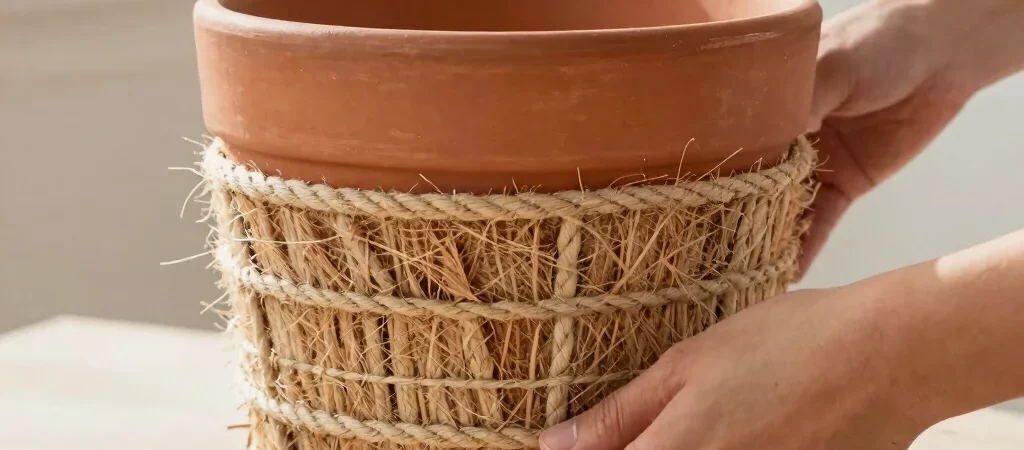
A ceramic pot can feel stark beside the warm, irregular texture of coconut coir rope. This project wraps the outside of a straight-sided container to make a decorative sleeve; it does not turn the rope into a waterproof planter. Gather coir rope, a clean dry pot or tin, scissors, and an adhesive suitable for both the container’s surface and your workspace.
Measure Before Gluing
Choose a container with mostly straight sides so each row of rope can sit close to the one below it. Wrap the rope around the widest part and leave a little extra for trimming, then test the first row without adhesive. Coir varies in thickness, so this dry fit helps you spot gaps before they become difficult to adjust.
Build the Wrapped Surface
Apply a narrow band of adhesive near the base, following the product’s directions, and press the rope into it as you move around the pot. Continue upward one row at a time, keeping the coils close without crushing the fibers. Work in short sections; coir’s rough texture can catch on itself, and small adjustments are easier before the adhesive sets.
Keep the Sleeve Dry
Trim the top end neatly and tuck it against the previous row while the adhesive is still workable. Let the sleeve cure fully, then slide the pot out if needed to check that the inside remains clear. When watering a plant, remove the pot from the sleeve and let it drain before putting it back; damp coir can retain moisture.
The best finish leaves the rope’s natural variations visible rather than forcing every row into a perfectly uniform band. For this project, start with coir rope and a container you already own; Semilircraft’s materials are there to help you gather the natural fibers for making.